


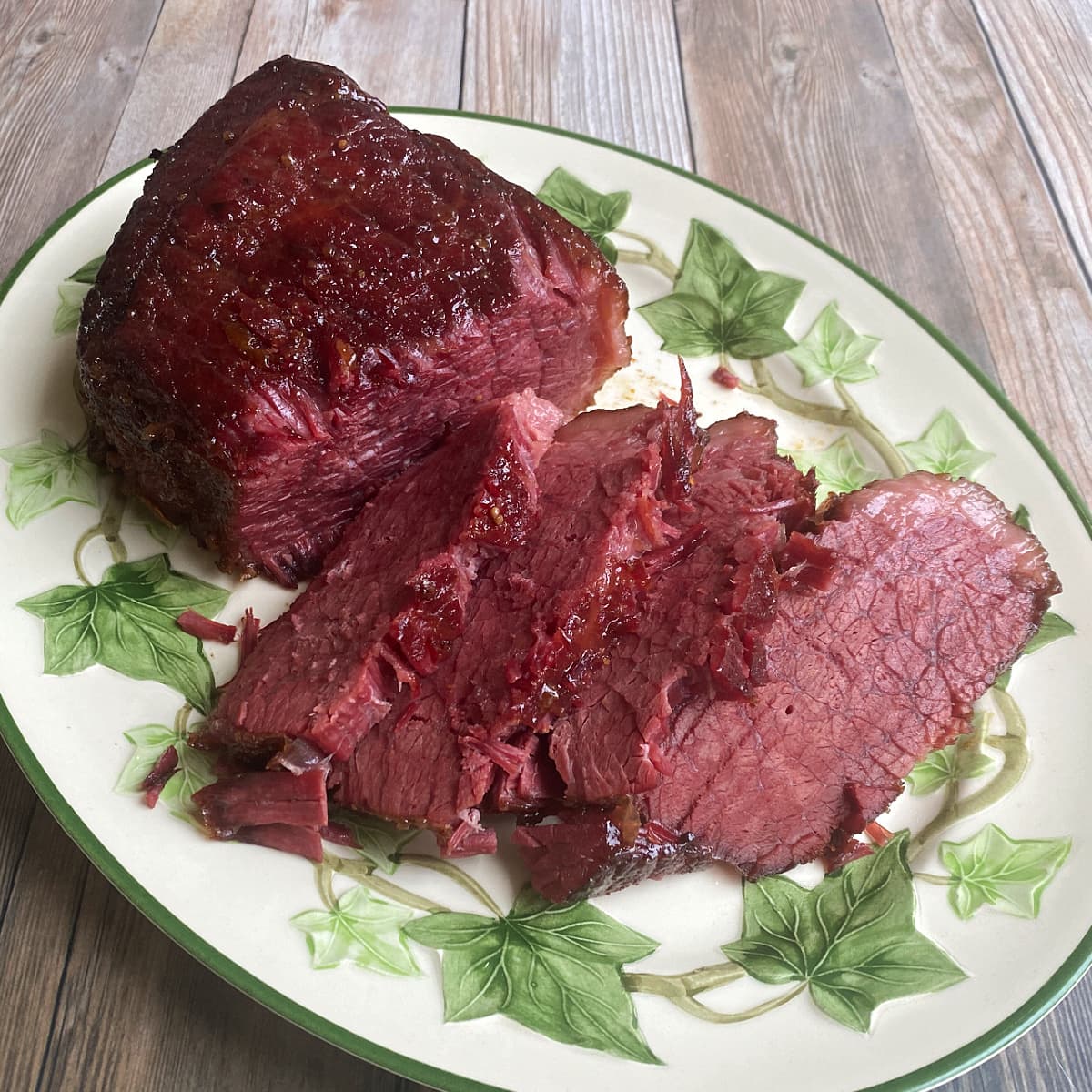
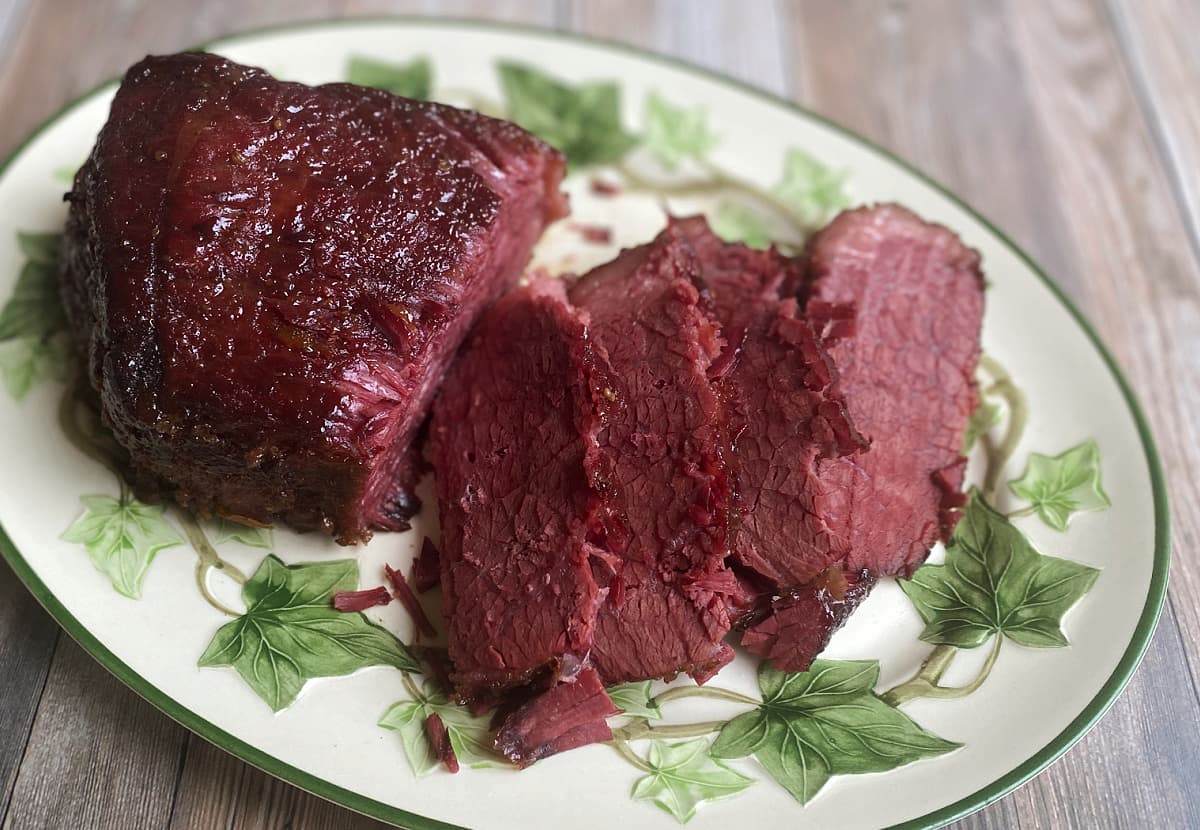
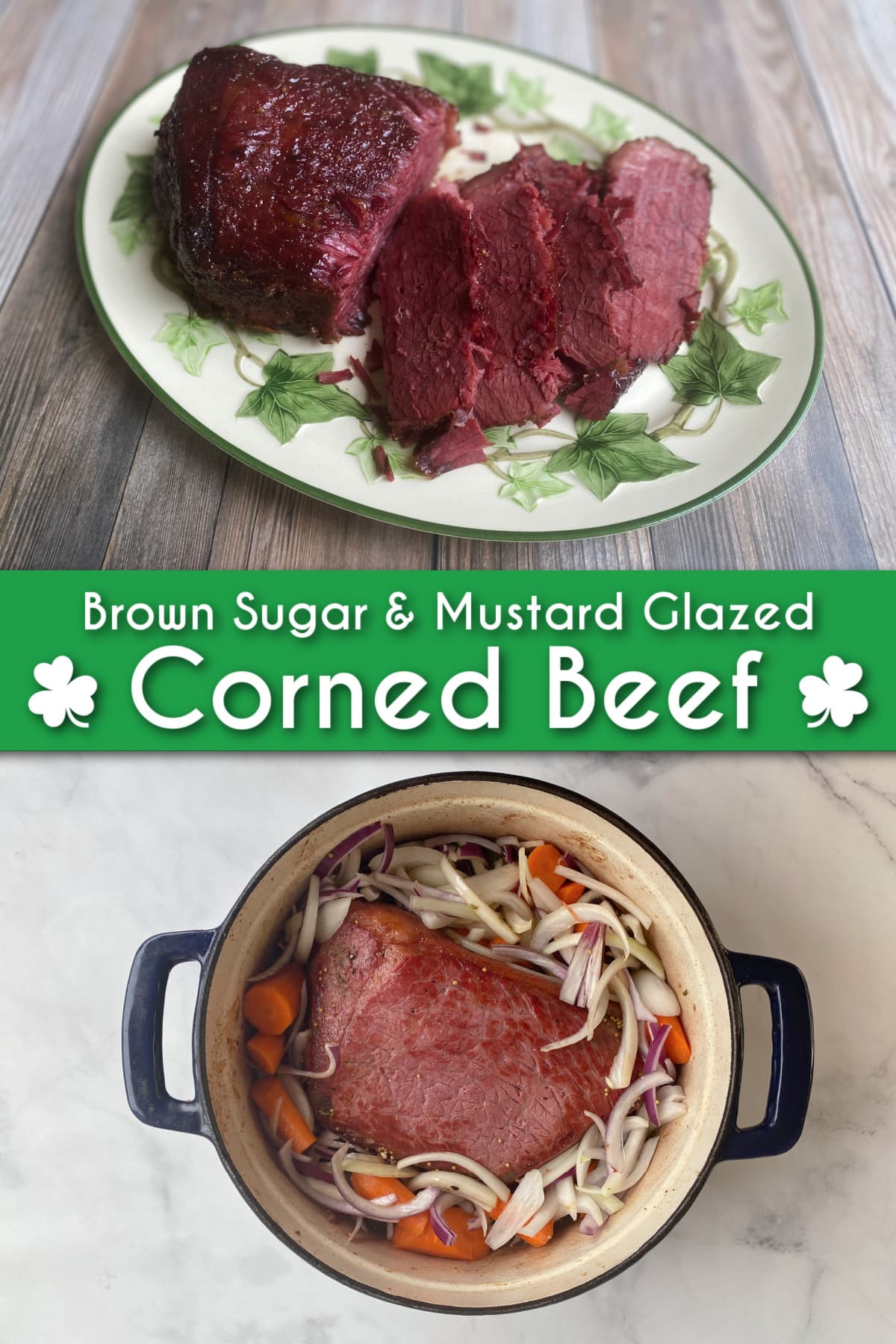
Fork-tender and perfectly seasoned, this succulent oven-braised Glazed Corned Beef Brisket recipe is finished with a caramelized brown sugar and mustard glaze, covering it in glossy, gooey, utterly irresistible crust.
Jump to:
- A St. Patrick's Day Tradition (And the Speech That Comes With It)
- Why You'll Love This Glazed Corned Beef
- The Story Behind Corned Beef & Cabbage
- Ingredients You'll Need
- How to Make Brown Sugar Mustard Glazed Corned Beef
- Tips for Perfect Corned Beef Every Time
- What to Serve with Corned Beef
- Leftover Corned Beef Ideas
- Make Ahead & Storage Tips
- FAQs About Corned Beef
- Oven-Braised Corned Beef with Brown Sugar Mustard Glaze
A St. Patrick's Day Tradition (And the Speech That Comes With It)
St. Patrick's Day dinner is a big deal at our house.
Not a "throw a corned beef in a pot and call it good" situation - we're talking full Irish-American feast mode. Corned beef, cabbage, soda bread, a mountain of potatoes… and yes, even layered Jell-O in the colors of the Irish flag, because some traditions refuse to be outgrown.
And every year, without fail, I give what has become known as Mom's [pause for eyeroll] St. Patrick's Day Speech.
It comes at that exact moment when the table is set, everyone is seated, and no one is allowed to take a single bite. A captive audience, if you will, to whom I wax eloquent for one to three minutes about why St. Patrick was an amazing human. (Spoiler: it has absolutely nothing to do with religion.)
The short version? St. Pat - a Roman-born Brit captured by Irish pirates and enslaved as a teenager - eventually helped bring Latin literacy and a manuscript-based culture to Ireland, therein allowing the Irish, during the Dark Ages, to quietly save civilization.
The whole reason for the Speech and the point I come back to every year is simple: one person, regardless of their circumstances, can leave things better than they found them. Your personal efforts and actions matter.
Somewhere along the way, that pause before dinner - half tradition, half gentle endurance test - became just as much a part of the day as the meal itself. And this glazed corned beef sits right at the center of it all.
Slow oven-braised until perfectly tender, then finished with a brown sugar and mustard glaze that turns glossy, sticky, and just the right balance of sweet and savory, it's the kind of main dish that feels a little celebratory, a little nostalgic, and entirely worth the once-a-year effort.
Because if you're going to make everyone wait to eat… it better be worth it.
Why You'll Love This Glazed Corned Beef
- Oven-braised = consistently tender
No guesswork, no babysitting a pot on the stove - just low, steady heat that delivers fork-tender results every time.
- A glaze that actually makes it special
The brown sugar and mustard finish caramelizes into a glossy, sticky coating that balances sweet, savory, and just a little tang.
- More flavor than traditional boiled corned beef
Searing + braising builds depth, so the final dish tastes richer and more intentional - not just salty.
- Flexible and forgiving
Works with different cuts, different mustards, and even alcohol-free substitutions without sacrificing flavor.
- Perfect for holidays - or really good leftovers
It's centerpiece-worthy for St. Patrick's Day, but just as good sliced into sandwiches the next day.
The Story Behind Corned Beef & Cabbage
Nearly ten percent of U.S. citizens (2020) can trace their roots back to early Irish immigrants, my sister and I among them. Beef was an uncommon commodity on most nineteenth-century Irish tables. So how did corned beef become the centerpiece of one of our foremothers' most iconic meals?
Hey, Renée, you know Corned Beef and Cabbage isn't really Irish, don't you?
- My Little (Vegan) Sister
True. Corned beef and cabbage is not Irish-Irish: it is Irish-American.
Corned beef and cabbage is a dish that emerged as newly immigrated Irish-Americans, influenced by both poverty and their equally impoverished Jewish neighbors, transformed their traditional pork and potato dish into what we in the U.S. now think as the quintessential St Patrick's Day meal.
Ingredients You'll Need
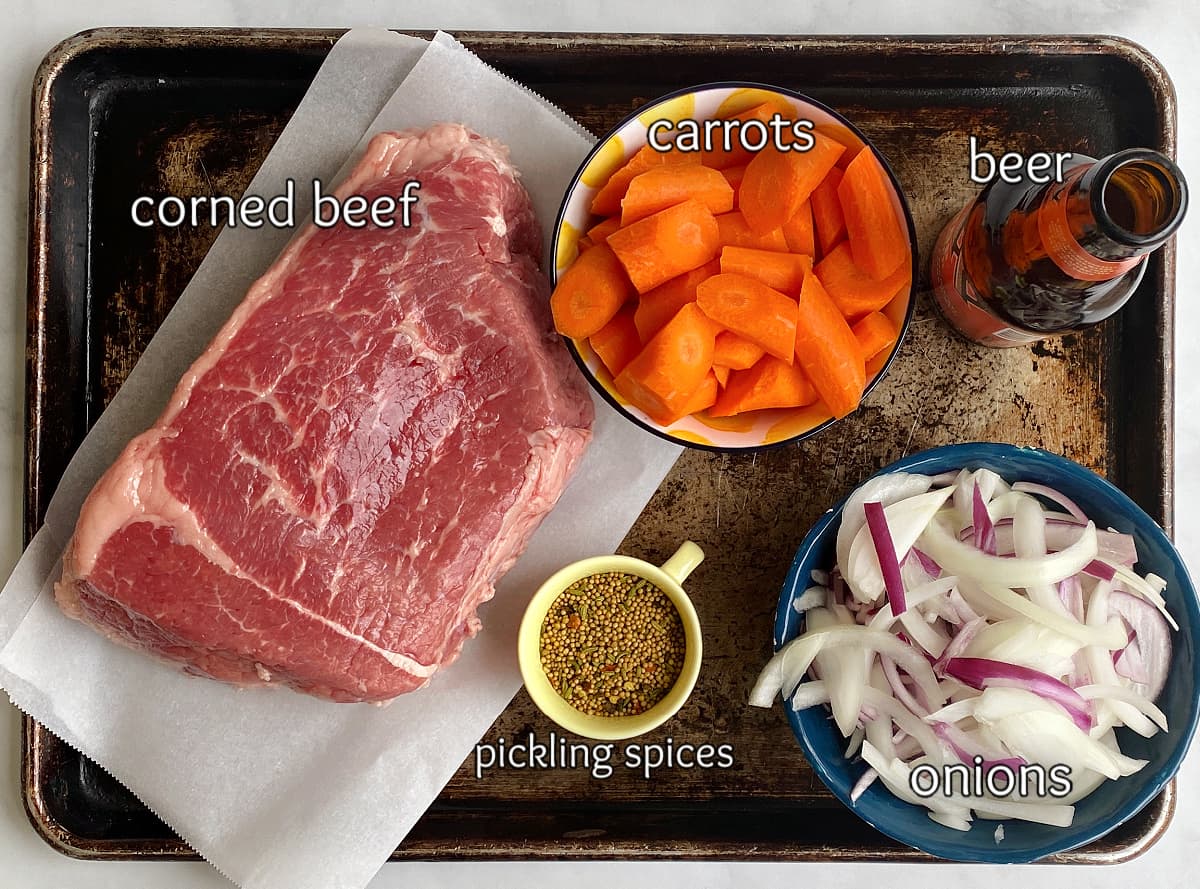
For the Braised Corned Beef
- Corned Beef
- Pickling Spices
- Beer - We recommend using an amber ale, pale ale, or light brown ale.
- Carrots & Onions
For the Brown Sugar Mustard Glaze

- Whole grain mustard
- Bourbon
- Salted butter
- Light brown sugar
Ingredient Notes & Smart Substitutions
Choosing a Good Brisket
Buy the best cut of corned beef you can afford - it truly makes a difference. In testing, we tried everything from budget cuts to higher-end options, and the quality gap was noticeable.
Less expensive, mass-produced corned beef tends to be significantly higher in sodium, which can leave the finished dish overly salty.
The best corned beef we've ever made was a Wagyu brisket from Costco. With its rich marbling, it cooks up especially tender and flavorful. If you happen to come across one and it fits your budget, it's absolutely worth trying.
Beer & Bourbon
Stick with an amber ale, pale ale, or light brown ale for braising.
Avoid IPAs or anything overly hoppy - they can make the corned beef taste bitter. Heavier beers like stouts or dark ales can also overpower the flavor.
Bourbon adds warmth and depth to the glaze, enhancing the natural flavor of the beef. If you prefer not to cook with alcohol, cola makes a surprisingly good substitute.
Mustard options
Whole grain mustard adds the best texture and flavor to the glaze.
Our favorite combination right now is a 1:1 mix of honey mustard and bourbon molasses mustard, but this is a flexible place to play - use what you love and make it your own.
How to Make Brown Sugar Mustard Glazed Corned Beef
Braising is a two-step cooking technique that includes of searing and then cooking meat or vegetables slowly in liquid in a sealed vessel. Unlike stewing, braised meat and vegetables are not completely covered with liquid.
Step 1 - Sear the Brisket
Preheat the oven to 325°F (163°C).
Before starting, confirm that your corned beef will easily fit into your Dutch oven (or skillet). If it seems like it needs more room, use a bigger pan.
Heat the Dutch oven over MEDIUM-HIGH until a drop of water sizzles on it. Add the canola oil and swirl to coat the bottom of the pan.
Carefully place the corned beef in the hot oil and sear on one side for 3-4 minutes. Turn the corned beef over and sear the other side for 3-4 minutes.
Try to sear the sides as well, including any fat layers. The shape of the roast will dictate how well you can sear the sides.
Step 2 - Oven Braise Low & Slow
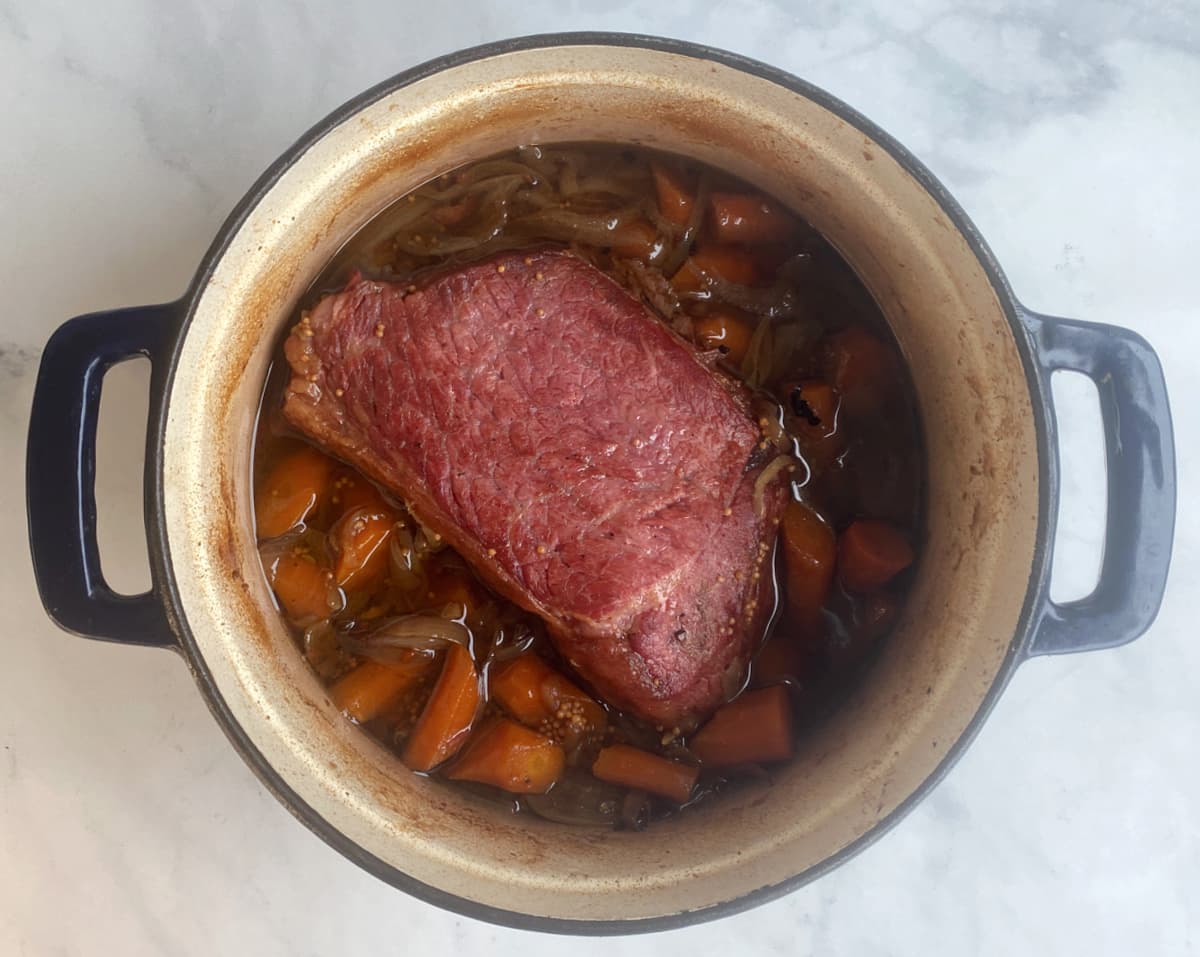
Remove the Dutch oven from the heat. Pour the beer (or water) in around the seared corned beef and allow any foam to dissipate. Pour the carrot chunks and slice onions around the corned beef, and sprinkle in the pickling spices.
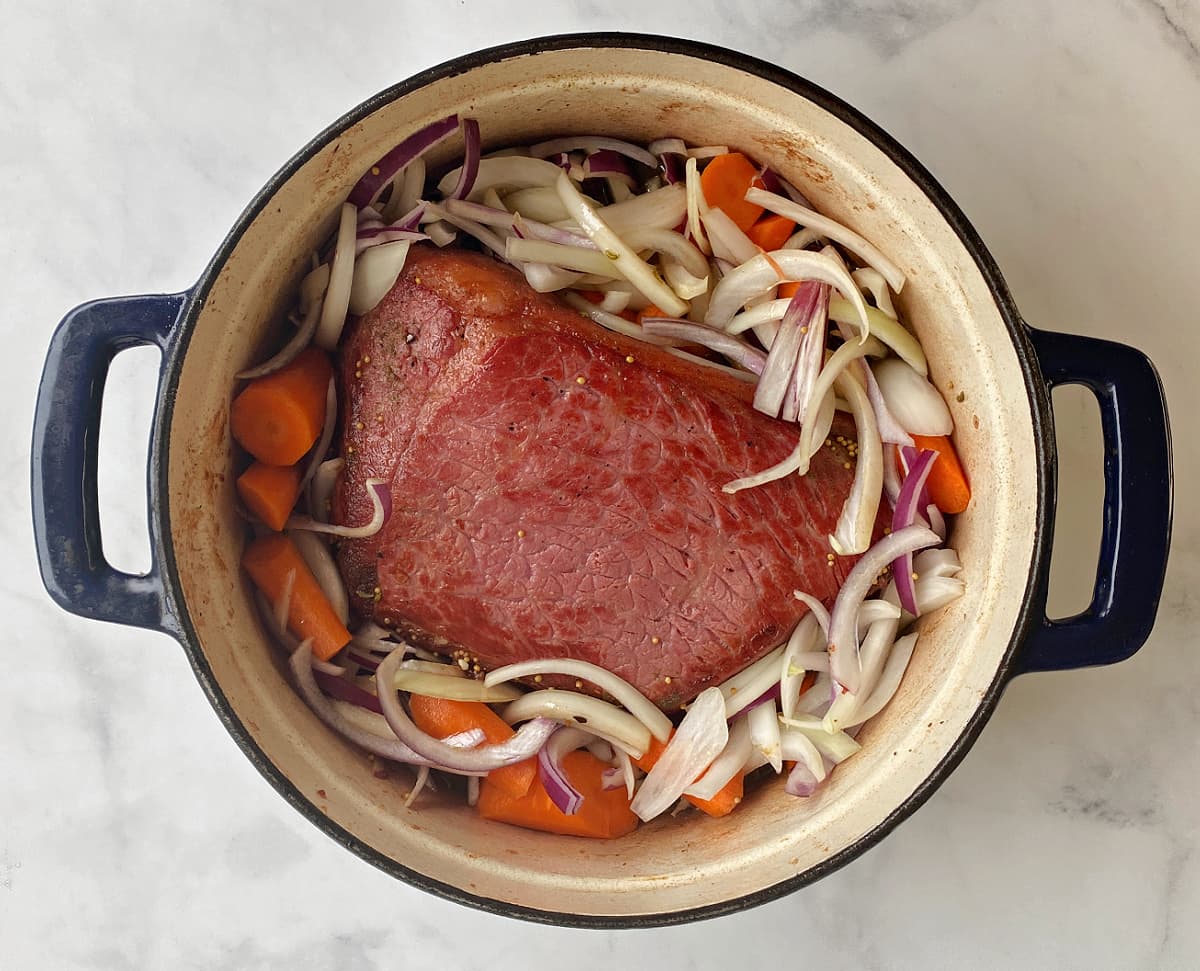
Cover the Dutch oven and place it in the preheated oven. Bake for 2 to 3½ hours at 325°F (163°C).
Remove the roast from the oven when it reaches an internal temperature of 160°-170°F (70°-75°C). (The best way to check for doneness is to use an instant-read thermometer.)
Important Note about Cooking Times
Due to size, shape, and composition, cooking times for Corned Beef can vary wildly: start checking at the 1 hour 45 minute mark.
We do not recommend serving the carrots and onions used in this recipe. The primary purpose of the carrots and onions in the braising process is to add flavor and moisture, and absorb excess salt. More often than not, we cannot serve them because they are simply too mushy and salty to enjoy. That said, we have had a couple of years when they were delicious.
Step 3 - Make the Glaze
While the corned beef is baking, prepare the brown sugar and mustard glaze.
- Melt the butter in a small saucepan over MEDIUM-LOW heat.
- Whisk in brown sugar, mustard, and bourbon (or water).
- Boil: Allow the mixture to come to a boil.
- Reduce the heat and and hold at a rolling boil for about 5 minutes, until the foam on top has dissipated and the glaze is shiny and smooth.
- Remove the glaze from heat.
Step 4 - Glaze & Caramelize
Line a rimmed baking sheet with parchment paper, or foil sprayed with non-stick cooking spray.
Remove the corned beef from the Dutch oven or clay baker, and place it on the baking sheet.
If the corned beef has a fat layer on one of the flat sides, place the fat-side down for the sake of presentation later.
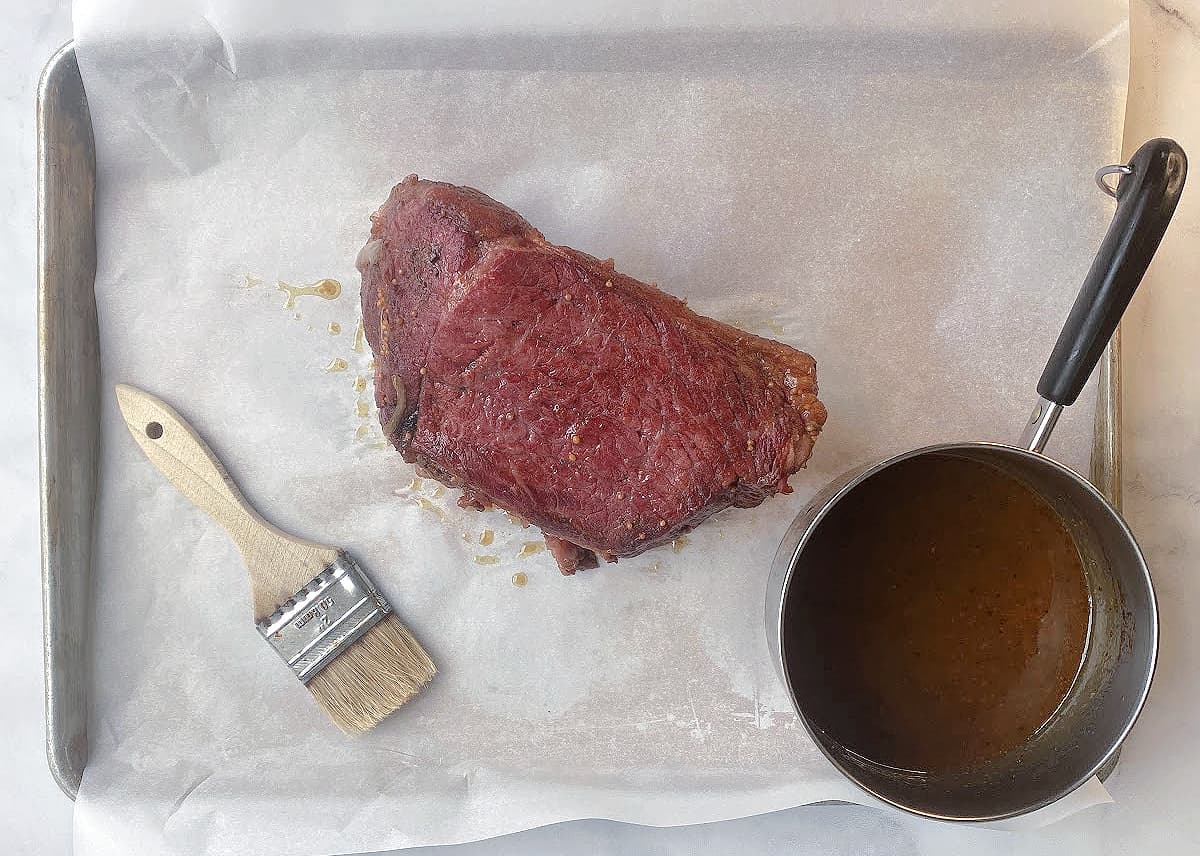
Using a basting brush, glaze the brisket generously.
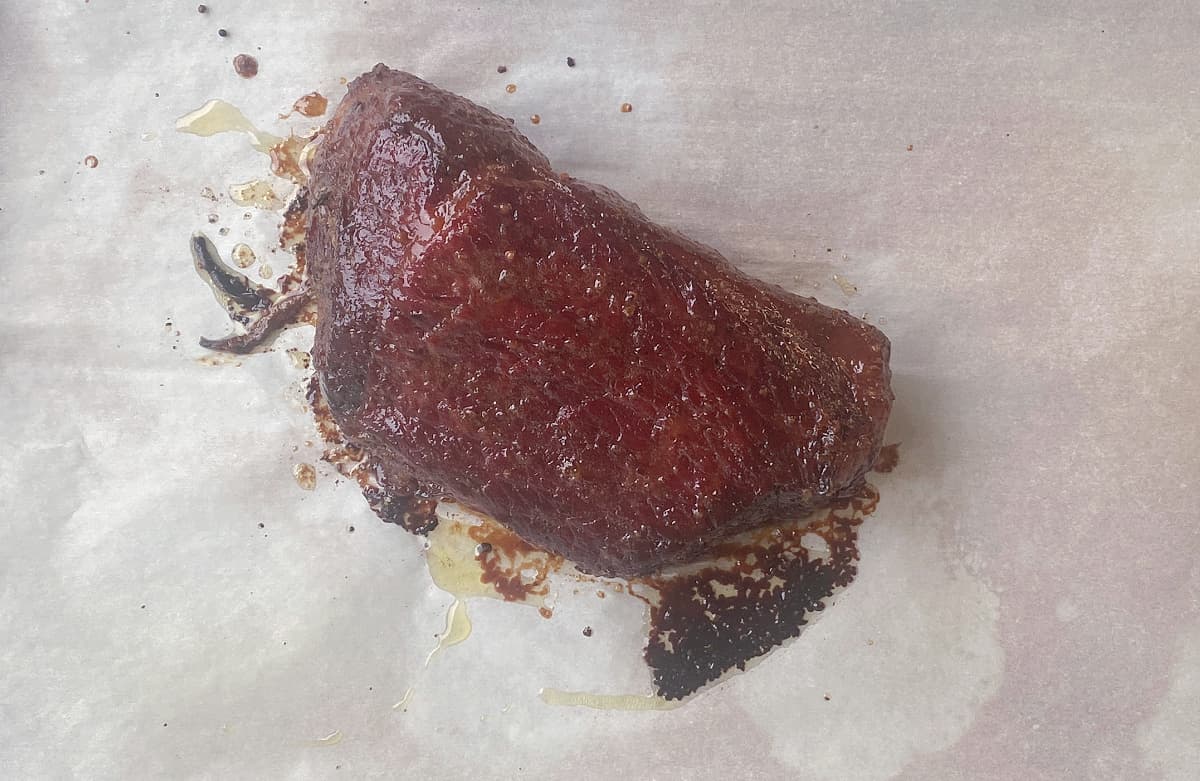
Place the glazed corned beef in oven and bake for an additional 30-40 minutes, reglazing every 10 minutes, until the internal temperature reaches 195-205°F (90-96°C). The glaze should be sticky and caramelized.
Remove the baked, glazed brisket from oven and allow to rest at least 15 minutes before serving.
Tips for Perfect Corned Beef Every Time
A few small details make all the difference between "good" and truly memorable:
Sear first for deeper flavor
That initial browning step builds a rich foundation before the braise even begins.
Don't rely on the spice packet alone
Most included packets are too small - adding extra pickling spices makes a noticeable difference.
Let it rest before slicing
Give it at least 15 minutes so the juices can redistribute.
Always slice against the grain
This is the difference between tender slices and chewy ones.
Corned Beef Internal Temperature Guide
- 160-165°F (70-75°C) → braised stage
- 195-205°F (90-96°C) → ideal temp for maximum tenderness
Note: Corned beef becomes truly tender closer to 195-205°F (90-96°C), even though it's technically "done" earlier.
How Much Corned Beef Per Person?
Depending on the cut, corned beef can shrink as much as one-third during cooking. Plan for at least half a pound per person; more if you want leftovers.
Cooking for a Crowd
If you are preparing a lot of corned beef (as we do on St Patrick's Day), a clay baker is a good alternative to baking it in a Dutch oven.
For each 3-4 pound cut of corned beef, use about one beer, one pound of carrots, and one sliced onion.
Sear each brisket one at a time in a Dutch oven or skillet, and then transfer to a large clay baker and proceed. (My clay baker will hold up to three 3-4 pound corned beef briskets.)
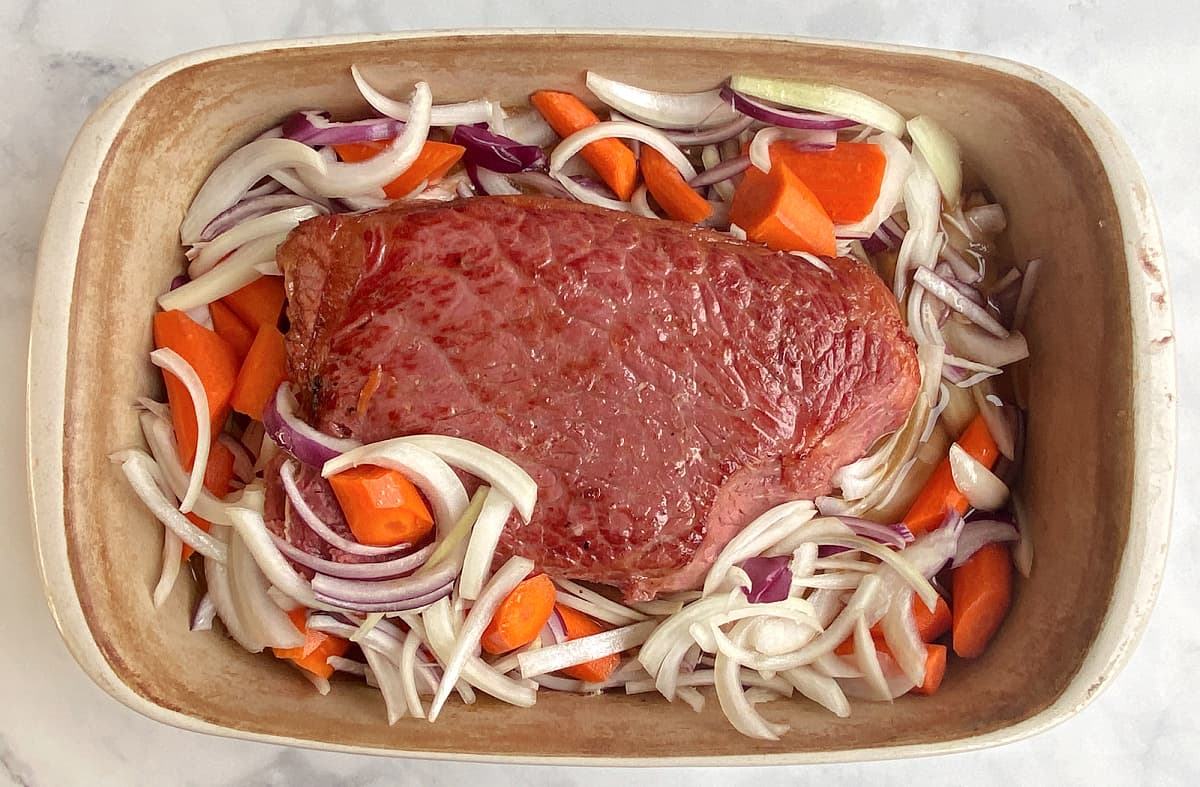
Cold clay should never be put into a hot oven. If you use a covered clay baker instead of a Dutch oven for baking, put the baker into the oven before preheating.
In a side-by-side test, cooking two similar corned beef briskets; one in a Dutch oven and one in a covered clay baker, the only noticeable difference between the two was that the roast in the clay baker cooked a bit faster than the one in the Dutch oven.
What to Serve with Corned Beef
At our house, this meal leans fully into tradition - with a few nostalgic extras that only show up this time of year.
- Mashed Potatoes
Creamy, buttery, and absolutely essential for soaking up all those savory juices.
- Cabbage (and sometimes corn)
Sautéed, tender, slightly sweet, and classic for a reason.
- Irish soda bread
Warm, hearty, and perfect for rounding out the plate (and swiping up any extra glaze).
- Something a little fun
Most years, I can't resist adding a retro side like layered Jell-O or carrot salad - because if you're going all out, you might as well go all out.
Leftover Corned Beef Ideas
- Classic Reuben Sandwich
- Leftover Mashed Potato Pancakes
- Irish Boxty (Traditional Potato Pancakes)
- Sweet Potato Breakfast Hash
- Breakfast Braid with Eggs, Swiss, and Corned Beef
Make Ahead & Storage Tips
- Store leftovers in an airtight container in the fridge for up to 4 days.
- To reheat: Add a splash of water or broth, cover, and warm gently in the oven or on the stovetop to keep it from drying out.
FAQs About Corned Beef
It depends on your salt tolerance. Corned beef is cured in a brine, so it can be quite salty. A quick rinse under cold water helps remove excess surface salt without affecting the overall flavor.
Most likely, it just needs more time. Corned beef can seem done before it's actually tender. Keep cooking until it reaches that higher temperature range and softens properly.
Absolutely. Apple juice or even plain water works just fine for braising. You'll still get a flavorful result, especially with the added spices and glaze.
Flat cut brisket is the most common and slices neatly, making it great for presentation. Point cut has more fat and can be more flavorful, but doesn't slice as cleanly. Either works well with this method.
Oven-Braised Corned Beef with Brown Sugar Mustard Glaze
Equipment
- 1 10-inch Enameled Cast Iron Dutch Oven with oven-safe lid, or large covered clay baker.
Ingredients
- 3-4 pounds corned beef
- 2-3 tablespoons canola oil
- 2 tablespoons pickling spices
- 12 ounces beer or water
- 1 pound carrots peeled and chunked
- 1 large onion peeled and sliced thinly end to end
Glaze
- ¼ cup butter
- ⅓ cup whole grain mustard or honey mustard
- ⅓ cup light brown sugar
- 2 tablespoons bourbon or cola, or water
Instructions
- Preheat oven to 325°F (163°C).
- Sear the brisket: Heat 1-2 tablespoons oil in a Dutch oven over medium-high heat. When hot, add the corned beef brisket and sear for 3-4 minutes per side, including edges where possible,until lightly browned.
- Add braising liquid & aromatics: Remove from heat. Pour in beer (or substitute), then add carrots, onions, and pickling spices around the brisket.
- Braise: Cover and transfer to the oven. Bake for 2 to 3½ hours (depends on the brisket) or until the internal temperature reaches 165-175°F.
- Make the glaze: While the brisket cooks, melt butter in a small saucepan over medium-low heat. Whisk in brown sugar, mustard, and bourbon (or substitute).Bring to a gentle boil, then reduce heat and simmer for about 5 minutes, until smooth, glossy, and slightly thickened.
- Glaze & finish: Line a rimmed baking sheet with parchment or foil. Transfer the brisket to the sheet (fat-side down for best presentation).Brush generously with glaze.
- Caramelize: Return to oven and bake uncovered for 30-40 minutes, brushing with additional glaze every 10 minutes, until the internal temperature reaches 195-205°F (90-96°C) and the glaze is sticky and caramelized.
- Rest & serve: Remove from oven and let rest for at least 15 minutes before slicing against the grain.
Notes
- Use the best quality brisket you can find - lower-cost options are often much saltier.
- If needed, rinse the brisket under cold water to remove excess surface brine.
- Plan on ½ pound per person (uncooked)
- Corned beef can shrink by up to one-third during cooking
Due to size, shape, and composition, cooking times for Corned Beef can vary wildly: when the brisket is braising in the oven, start checking for doneness at the 1 hour 45 minute mark. Beer & Substitutions
- Best choices: amber ale, pale ale, or light brown ale
- Avoid: IPAs or very hoppy beers (can turn bitter)
- Non-alcoholic options: apple juice or water
- Bourbon enhances flavor and helps tenderize slightly
- Substitute with cola or water if preferred
Nutrition
This website provides approximate nutrition information for convenience and as a courtesy only. You are solely responsible for ensuring that any nutritional information provided is accurate, complete, and useful.
Love it? Pin it! If you love this Glazed Corned Beef recipe, be sure to save it! Pin it to your favorite Pinterest recipe board before you go!
Did you like this recipe? Please leave a star ⭐️⭐️⭐️⭐️⭐️ rating below in the comments section! You can also stay in touch with us by following us on Pinterest, Facebook, and Instagram.

CYC says
This was delicious! Everything I wanted in a corned beef recipe: searing, braising, and finishing in the oven! I added a smidge more liquid toward the end in the oven. Probably b/c I opened the lid so often, to enjoy the looks and smell of this lovely dish. The glaze is amazing too. Served with simple pan-seared and sauteed cabbage and roasted potatoes in the oven with the corned beef for the finish. Saving this in the permanent files. Will be my go-to every year!
Renée B. says
This is such a joy to read – thank you! I love that you really leaned into each step of the process (and I can’t blame you one bit for sneaking peeks in the oven…that aroma is irresistible). Your sides sound absolutely perfect – simple cabbage and roasted potatoes soaking up all that flavor? Yes, please. And I’m so glad the glaze was a hit – that’s one of my favorite parts.
Thanks so much taking the time to come back and share this - it made my day!
Charah says
Ah, the timeless comfort of corned beef! Its savory, melt-in-your-mouth goodness never fails to satisfy. Thank you for sharing!
Renée B. says
So glad you enjoy this classic corned beef recipe!
TAYLER ROSS says
We made this corned beef for St. Paddy's Day last year and it was AMAZING! Already can't wait to make it again this year!
Renée B. says
That sounds fantastic! It's wonderful when a dish becomes a tradition, especially for special occasions like St. Patrick's Day. Enjoy the celebration, and if you have any secret tips or twists to your recipe, be sure to share!
Tiffany says
This is what my family expects for family Sundays so thank you so much! The glaze is perfect!
Renée B. says
You're very welcome! I'm thrilled to hear that your family enjoys it. Happy cooking!
Angela says
This corned beef is perfection! Love the glaze. My new favorite way to make corned beef.
Renée B. says
So glad you enjoyed the corned beef! The glaze does wonders, doesn't it? It's become my go-to method too. Happy cooking!
Gary says
Absolutely the best corned beer recipe I have ever used. I added sautéed cabbage with bacon and roasted potatoes for a different spin on St Patricks day.
I cook a lot and my wife is not a foodie and she can't stop talking about how tasty this was. She wan't to know if we can make this more often.